

Remember the last time you finished a level in a game? The excitement, the engagement, the euphoria? What if your learners could also feel that same way after completing one of your lessons?
I’ve discovered that lesson planning and game design share surprising similarities. So with the addition and leverage of game design principles, I’ve managed to engineer those same emotions. And if you can do so – why not? Remember, learning should be fun. Fun increases engagement, engagement makes the learning “sticky”, and “sticky learning” makes learners smarter.
You might think that this only applies to young learners – but it also applies to adult learning as well. These principles can be applied as easily in corporate training (such as for positive psychology or scriptwriting)) as they can for formative learning (like PSLE English or O-Level Literature).
Before I continue – this is not about gamification. That’s another set of tips for another time.
Rather, this is about how game design principles can elevate your curriculum development.
I must disclaim that I’m not a professional game designer. I’m interested in game design theories and philosophies, and much of what I know is based on game design books and resources that I’ve read.

Clear goals and win conditions
When you play a game, you know exactly what success looks like. Monopoly? Have as much money and properties as possible. Final Fantasy? Acquire every spell and item for 100% completion (I know most of you do that). Candy Crush? Crush all the, erm, candies.
And lessons benefit from this same level of clarity of what success is as Grant Wiggins and Jay McTighe discovered.
How? Your lesson objectives should be clear – so that the learners know how to benefit and be successful in it. You also give a metric for what success looks like, especially for skills-based topics – success means you can write a social media post that markets you within 30 minutes, or an expository essay introduction that has all five components.
Just like how modern games often offer checklists for success, having a rubric (or checklist) is helpful as a “win condition” guide. It’s always helpful to provide the success conditions in a clear and discrete format.

Progressive challenges and scaffolding
The final level of a game is always more difficult than the first level. Modern games also have difficulty level AI that tunes the challenge of the game depending on how well you’re doing (like Left for Dead). Along the way, games give you health, power-ups, and other goodies to help you face challenges along the way.
Similarly, lessons benefit from this progressive increase in difficulty. Vygotsky’s Zone of Proximal Development (ZPD) outlines this as the gap between what a learner can do without help and what a learner can do with help. This means that lessons should always be pitched at one level above the learner – not more than that because it’d be too difficult, and not lower because no improvement will take place.
What does that mean for lesson planning? It means you start with guided practices (akin to extra health and power-ups) for a new topic, before proceeding to more independent tasks for learners. You place the most challenging questions at the end of the learning task, not at the beginning – by gradually increasing complexity to build confidence.
And you provide power-ups – the form of prompting questions, frameworks and structures for answering, model answers, and worked examples. Just like how you don’t always use every power-up, your learners won’t use every bit of scaffolding it provides. But different gaming styles benefit from different power-ups, and so different learning styles also benefit from different types of scaffolding.

Feedback loops and check-ins
In games, you get different kinds of feedback on how you are progressing – you take damage and your HP decreases, you defeat the monster and your XP increases, you find the secret treasure chest and gain the ultimate weapon.
This feedback shapes behaviour and guides players towards certain actions. That lava surface deals damage? Avoid it. Killing slimes gives you XP? Destroy them. Clicking “A” on some pots give you Elixirs? Spam “A”.
Likewise, feedback loops have a huge effect on learning. When done well, feedback (as well as feed up and feed forward) magnifies the learning that happens, as shown in a study by John Hattie and Helen Timperley.
Feedback can be provided in terms of progress – what percentage of the assignment has been completed? It can give be given as peer feedback sessions, which are a sort of “power-up” to help the learner improve (so don’t skip those pair sharing activities!).
More importantly, feedback comes in the form of assessments – and the grades that are given. This is really the equivalent of how much XP you get and how much damage you take – each mark that is lost is equivalent to HP that has been depleted.
Remembering that your assessments are feedback helps you, especially in the more open-ended (read: essays) types of assessments. So make the feedback rewarding and constructive, and not punitive.

Structured rules and boundaries
No matter how realistic a game is, it’s still a simulation of real-life. Hence, there are always restrictions or boundaries – you can’t shove the weapon into the boss’ nose to defeat it and you can’t use your rocket launcher to fly into the sun. However, players can create fire from their hands or swing swords that are bigger than them. At the very basic level, they can only do what the controller or mouse lets them do. Players accept them because they set the rules and boundaries of the game world.
Likewise, lessons benefit from structured rules and boundaries. Word counts provide expectations. The mathematical techniques that are allowable or the theories that you can use show how learners are supposed to “act” in the game world of your lesson. Learners could cheat to pass the assessment, but they know it’s not the right way to “win”.
These structured stages create a safe, focused environment to learn and explore – in every sense of the word.

Narrative flow and engagement
All games have a story to them – an evil giant turtle has captured a fungal princess, a deluge of candy impedes your way and you have to crush them to escape, or even simply that you must build the tallest tower from unstable blocks to win.
These stories hook us by giving a mission that requires a hero – the player – to accomplish.
Likewise, lessons can do the same thing. Frame the learner as a hero who needs to solve a mission (the lesson objectives) to increase emotional and cognitive investment. I think escape room lessons are the most fun way to do that, but you can always frame it as “give the teacher what he wants” or “satisfy the customer so that you have a repeat buyer”.
The story is what sells, and increases the motivation to learn.
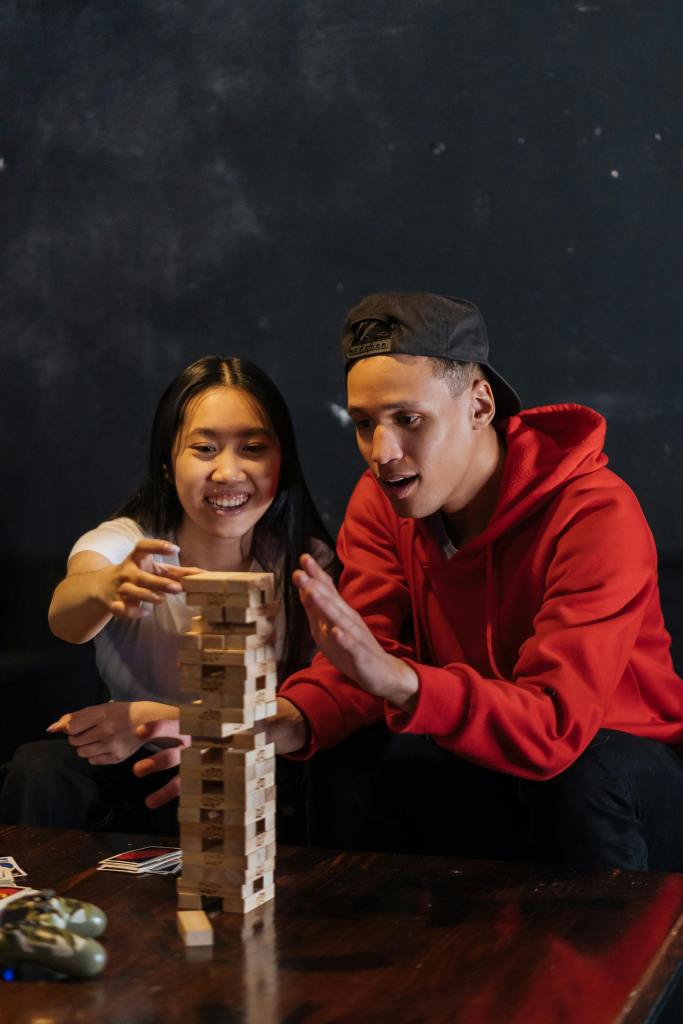
Benefits of designing lessons the way you design games
The benefits are manifold, but in case you have to justify this to your boss – here’s a bullet point of benefits.
- Increases intrinsic motivation: learners learn for the sake of learning
- Empowers learners: meaningful choices provide autonomy, which elevates psychological wellbeing and makes them feel more confident to take on greater challenges
- Stickier learning: spend less time to learn more, and maximise your L&D budget
But you’ve seen all that in your lessons already, haven’t you?
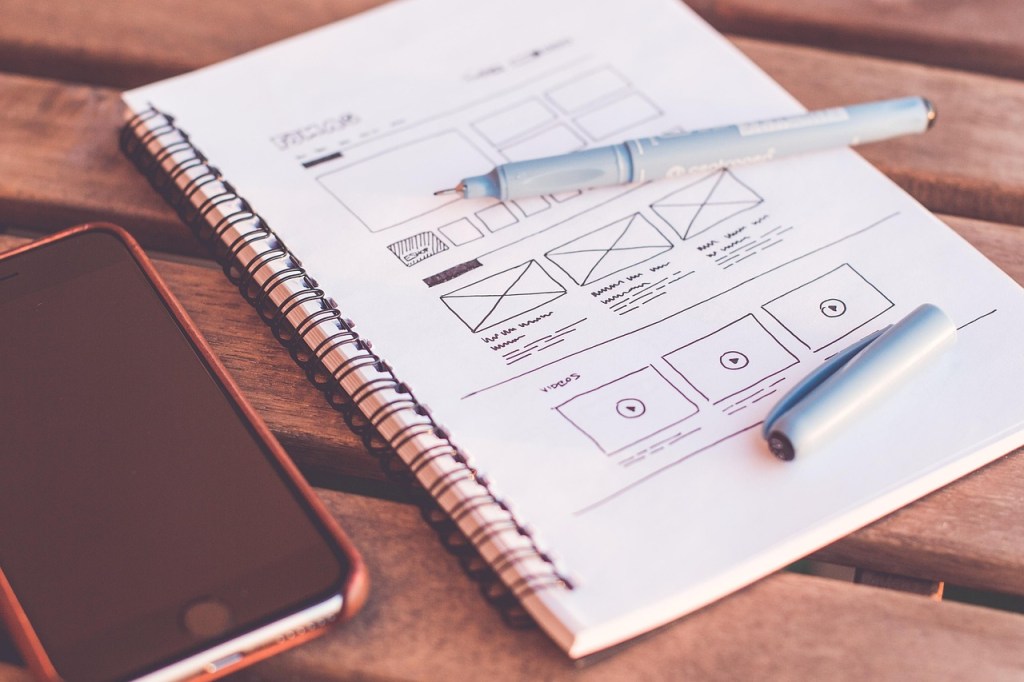
A framework for designing lessons like games
If you’re more of a gamer than an educator, then this is for you. Here’s my extended metaphor for game design as learning design – to better help frame those educating juices.
| Game element | Lesson element |
| Goal | Learning objectives |
| Power-ups | Scaffolds, aids, models, frameworks, tools |
| Enemies, obstacles, damage, puzzles | Feedback |
| Story and narrative | Assessment |
| Boss (not the one that pays you) | Lesson structure |

Invite learners to your lessons – the way you’d invite them to play games
By reframing lessons – and lesson design – using the lens of games, it makes it more fun for you, the educator. It makes it more fun for the learners. And this positive spiral of making it fun for both parties means the learning is more effective and goes deeper.
Which means that the next time you begin a lesson, you come at it from the perspective of getting your learners to press Start (or launch the app for the game if you’re on a PC).
It’s about inviting every learner to play the game – the game of learning.

References


 Fun to be Smart
Leave a reply to How to win the race of life? By realising it’s a Choose Your Own Adventure game – Happiness for Busy People Cancel reply