
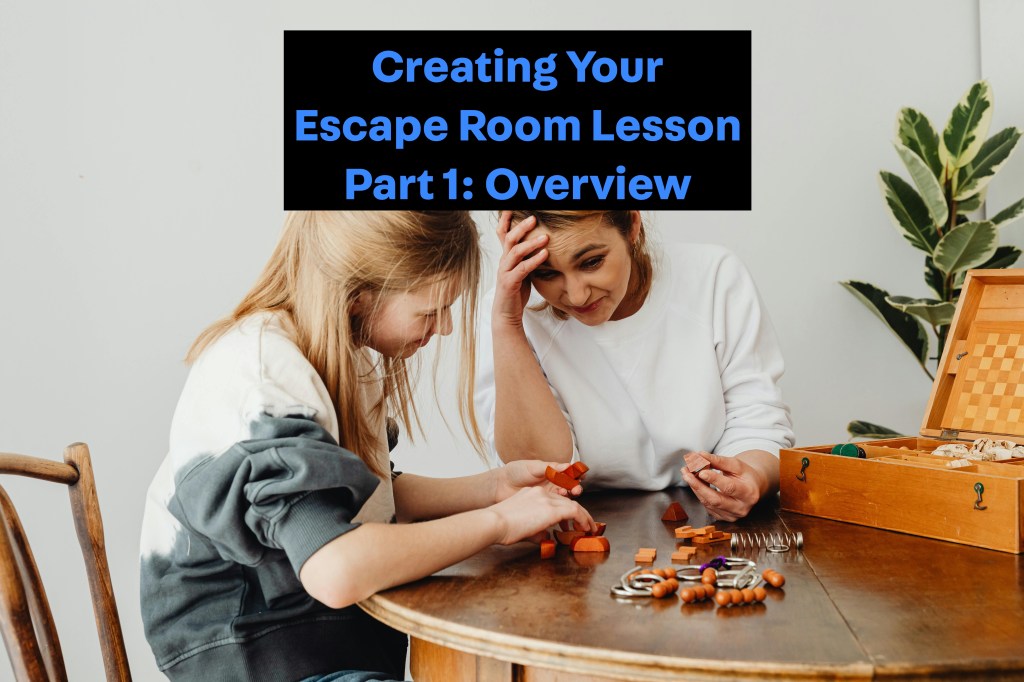

Yes, you can build your own escape room lesson!
This is intended to be Part 1 of a 6-part series.
Everyone can create their own educational escape room – it’s simply a matter of how complex or how simple you want it to be.
As long as you have your learners working together to achieve a goal under time pressure – you have the most simplest of escape room lessons available. Yes, this may be an activity where each group has a time limit to put together a presentation. But at its core, that’s what educational escape rooms are all about.
Put in a story, puzzles, and a sequence – voila! An escape room lesson has been created.
No stagecraft or carpentry is necessary. You can think of this as a pen and paper escape room, although there are often props included (in the form of locks).
The key is to understand the components that go into an educational escape room, and how to build each part such that they contribute to the whole.
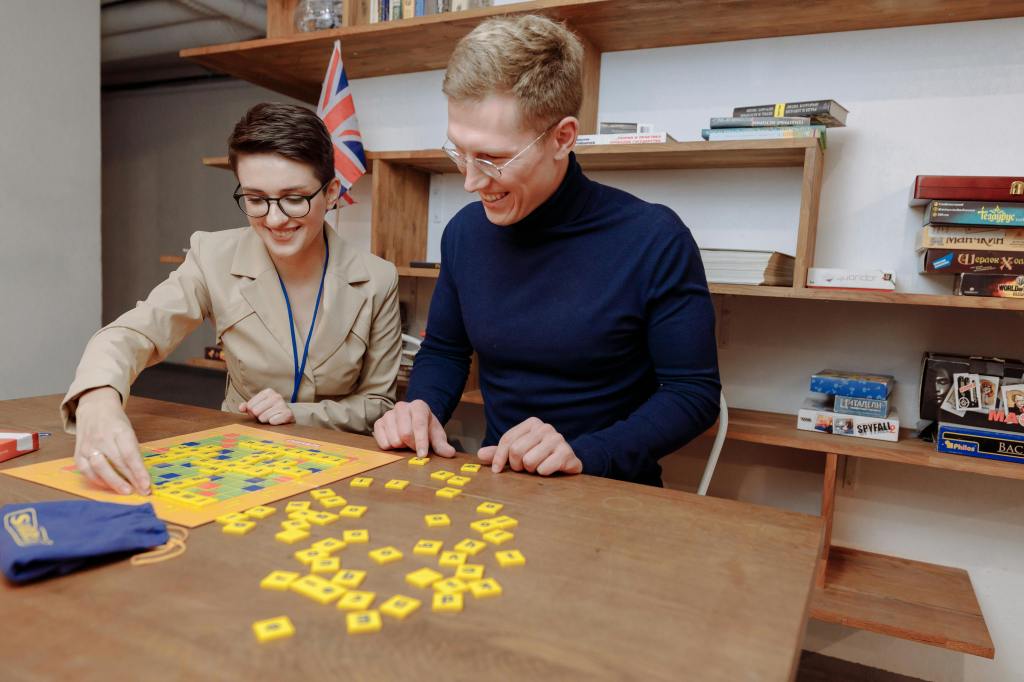
What are escape room lessons?
I’ll use the terms educational escape rooms and escape room lessons interchangeably.
An escape room is a live-action, team-based game where players solve puzzles under time pressure to achieve a goal (Nicholson, 2018).
For me, the act of building an escape room is incredibly rewarding because it’s literally a game-based approach to curriculum design. You get to immerse the players (learners) in a world of your own design, and to escape they must master the content that you have set out to teach. It’s like a sandbox that you’re building for learners to play in, but a nutritious sandbox which makes their play so enriching.
If you stop to think about it – all games teach you something. Pokémon teaches you how to classify diverse creatures and identify their features, which is a valuable skill in biology. Dungeons & Dragons teaches you to do mental mathematics by quickly adding up numbers in order to determine your attacks and damage. Super Mario teaches you physics because you need to master how Mario moves in the world.
There are also copious benefits to educational escape rooms, which I’ve written about previously.
So what makes up an escape room lesson?

Components of an educational escape room
There are four major components to an educational escape room. In order, you should think about:
1. Learning Content: This is what the learners will learn. This is the pedagogical part.
2. Story: This is the premise or scenario of the escape room. This is the fantastical part.
3. Gameplay Sequence: This is the order in which the learners will learn the content. This is the structural part.
5. Puzzle Units: These are the individual puzzles that the learners must solve – it is what the learning content may be transformed into. This is the fun part.
While I generally prefer to start with Story, because I tend to approach curriculum design as if I were writing a TV show – it is advisable to start with the Learning Content first, because that is the raison d’etre of your escape room lesson.
Each of the following instalments in this series will focus on one of the components, with the final instalment tying everything together as one coherent escape room lesson.
However, I’ll give a brief overview of each component.

Educational Escape Room Component #1: Learning Content
This is what the learners must learn during the educational escape room. Remember that it is a lesson first and an escape room second, as my mentor told me, so the learning must always come first.
Generally it is easier to already have an existing lesson available, then have it converted to an escape room lesson – rather than to build the learning content along side the rest of the educational escape room. It is possible, but it requires a certain level of master of the content.
I’ve personally done both – taking a 2-hour lesson and then cutting it in manageable parts for the escape room lesson, and creating learning content whole cloth while also designing the educational escape room experience. I’d say that if there is already an existing lesson, then this gives you more time to devote to the Story and Puzzle Units. Also I believe they activate different parts of the brain, so to have to create the Learning Content alongside the rest of the escape room requires you shift gears quite a bit.
Any type of learning content can be turned into an educational escape room – it can be discrete information like Mathematical concepts or linguistic information like communication skills. Even writing skills can be taught through an escape room lesson.

Educational Escape Room Component #2: Story
Since this is a game, the Story is the premise, the framing or “narrative container” that learners will encounter the educational escape room.
For example, I had designed an escape room lesson that was meant to teach figurative language (the Learning Content). However, the Story was that aliens had invaded and kidnapped their teacher, and only by solving figurative language puzzles could their teacher be saved.
In another educational escape room, we taught communication skills (Learning Content) to a real estate firm. The Story was that the learners had inherited a dilapidated old mansion, and had to refurbish it by solving the communication skills puzzles in each room. There was a bonus storyline in that they could discover the arguments that plagued the previous owners of the mansion.
I find the Story the most fun part so I usually start with it, but it is better to have your Learning Content first, then choose a Story to go along with it.
Note that the Story does not have to have the same theme as the Learning Content. Although a dilapidated house and real estate firms are thematically similar, figurative language and aliens are not. Have fun with your Story. The more outlandish it is, the more fun it will be.
Educational Escape Room Component #3: Gameplay Sequence
Here’s where it gets a little nerdier.
In a traditional worksheet or lesson material, the different items of learning come in a fixed sequence. You may jump ahead or skip certain parts, but the order of learning is under your control – the educator. The learners have almost no say in the order of how they learn the items.
In an escape room lesson, the learners decide what to learn at their own pace. There are sequences you can use – a linear one, which means that all learners have to learn it in the same order (this is the most structured and most similar to a traditional worksheet), non-linear ones that follow a Choose-Your-Own-Adventure type of order, or a combination of both (that has “gated” items which ensure all learners learn at the same pace). Depending on your content, you may also have items of learning that are skippable (but these should be optional units).
This Gameplay Sequence acts as a roadmap and progress chart, because escape room lessons are mostly self-paced. You can use it to know when to give assistance or better adjust your time and scheduling.
Educational Escape Room Component #4: Puzzle Units
Finally, you have the puzzle units.
In a traditional worksheet, you have question that must be answered. The correct answer is obtainable once you understand the content.
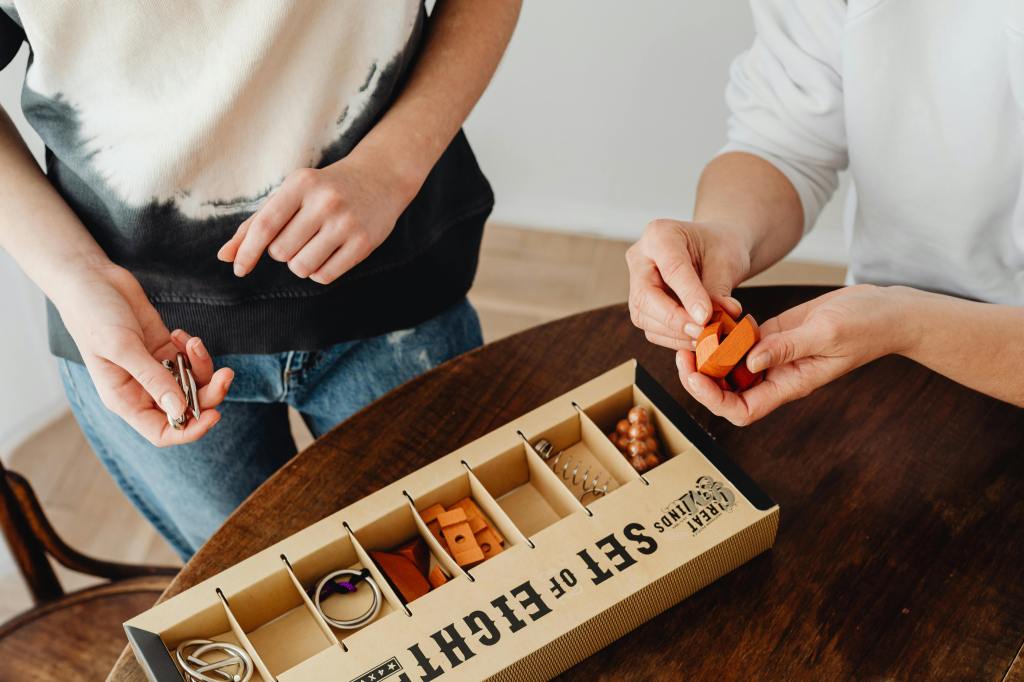
Similarly, the puzzle units of an escape room lesson function as the “questions”. They look very much like IQ puzzles in those MENSA books, which use a variety of visual and spatial elements to test for understanding (as opposed to using only text). Audio, tactile, and olfactory elements may also be included if you have the means – and gustatory elements as well!
The Puzzle Units are thematically linked to the Story. For example, if your Story is about fairies hijacking a party and the Puzzle Unit is a matching puzzle, you can frame the Puzzle Unit as a mess that the naughty fairies have created, which you must clean up in order to proceed.
These should be designed last, because they must mesh and lead into the rest of your components.

Ready to build your own educational escape room?
In future instalments, I’ll go into tips and techniques for each component.
But now, you know the theoretical underpinnings of building an educational escape room.
An escape room lesson is not very much different from a regular lesson – so if you’re a seasoned learning designer, it just takes a mindset shift in order to design one. Having a flair for games, visuals, storytelling, and puzzles is a bonus, but you can create your own educational escape room with just basic learning design principles.
That extra effort will probably result in the most memorable learning experience your learners have ever had.
Stay tuned for a deep dive into each component.
And if you’d like to consult me on your own educational escape lesson – drop me an email.
You might also want to read:
- Educational Escape Rooms: Using Play To Boost Learning
- The secret parallel between lessons and games: writing lessons like a game designer
- Lessons are the new Netflix: Scripting lessons like a TV show
References
Nicholson, S. (2018). Creating engaging escape rooms for the classroom. Childhood Education 94(1). 44-49. https://doi.org/10.1080/00094056.2018.1420363


 Fun to be Smart
Leave a comment