
Fun is a feature, not a bug
Once, I had to deliver a content-heavy lesson about marketing. Facts, figures, concepts. While I love imparting marketing knowledge, I also had to pack a lot of info to ensure the learners were competent after 3 hours.
So I picked out an example of a dumb LinkedIn post masquerading as “advice” when it was really humblebragging, ripped into its stupidity and tore it to shreds, and included it as part of my slide deck. There were chuckles as I went through the slide, explaining how it was a negative example of self-promotion, and I could also feel myself feeling more energised as I explicitly said these were all things not to do.
It was fun both for me, and for the learners.
More importantly, fun isn’t the opposite of learning. It enhances learning. In fact, fun is the best way to make learning happen.
In my rush to cram content, I sometimes forget that it has to be fun – it has to be joyful. No matter how serious you think your learners are, they will always benefit from a fun lesson. And in over a decade of writing curriculum, I’ve been reminded about this again and again.
Even if you can’t gamify your lessons, you can make them fun. Because fun is how learning happens the best.

Learning is all about positive emotions
It’s been said that emotions are why we make our decisions, and logic is how we justify our beliefs in our decisions. That’s because our brains prioritise emotions before cognition (Immordino-Yang & Damasio, 2007).
That’s why setting the mood for a classroom is important – no matter what age group the learning is for, no matter what the content is about. Positive emotions such as joy, curiosity, and humour enhance learning, memory, and attention (it’s also beneficial for your wellbeing according to positive psychology, which I use in my coaching practice).
Copious research shows this benefit:
- Broaden-and-Build Theory states that joy and curiosity broaden a person’s momentary thought-action repertoire (Fredrickson, 2001)
- Self-Determination Theory explains that joy and interest increases intrinsic motivation, which in turn increases persistence, learning depth, and academic achievement (Ryan & Deci, 1985)
- Humour enhances attention and improves long-term memory recall (Ziv, 1988)
- Curiosity activates the dopamine-related reward system in the brain, which then improves hippocampus activity which boosts learning and memory (Gruber & Ranganath, 2014)
- Emotionally positive classrooms help learners to maintain focus, self-regulate, and engage in deeper learning (Immordino-Yang & Damasio, 2007)
The simplest way to that is fun. Fun is the pathway to positive affect (pleasant emotions), which create optimal conditions for memory and retention.
In other words, if it’s fun, it sticks.
Fun increases engagement
There are three types of engagement – cognitive, emotional, and behavioural (Fredricks et al., 2004). Fun learning experiences tap into all three types of engagement for holistic, thorough engagement:
- Cognitive engagement comes when learners think harder
- Emotional engagement comes when learners feel connected to the material
- Behavioural engagement comes when learners participate actively
Fun and engagement go hand-in-hand. After all, if your learners are’t engaging in your material – then real learning has yet to happen.

Fun increases intrinsic motivation
Intrinsic motivation comes from interest, curiosity, enjoyment, and/or personal value – sources that are within the individual. Extrinsic motivation comes from grades, praise, money, and/or avoiding punishment – sources that are external rewards or pressure.
While I admit to being partially driven by grades (bragging rights, yo) (and it fulfills the Accomplishments aspect of the PERMAH theory of wellbeing when it comes to producitvity), I readily admit that intrinsic motivation (curiosity) is a much stronger and more reliable driver. Grades (extrinsic motivation) drove me to complete a graduate diploma (in applied positive psychology) locally, while interest (intrinsic motivation) now drives me to complete a Master’s (in applied positive psychology) in a foreign land, along with all the other costs and time that it requires.
That applies for learners too. Motivation to learn increases when learners feel autonomy, competence, and relatedness (Ryan & Deci, 1985) as explained by Self-Determination Theory, which comes from fun. Fun in the form of games, as well as storytelling and playful challenges (fun isn’t always about gamification).
It means that fun learning causes learners to do more because they want to, not because they have to.
Fun increases retention, transfer, and creativity
Remember how humour improves better retention and recall (Ziv, 1988)? It also enhances memory encoding (Schmidt, 1994), which leads to better performance in the first few levels of Bloom’s Taxonomy.
But of course, learning is not all about memorisation (we have the Internet and AI for that now). Real learning is about transfer. Playful learning stimulates the kind of novel challenges that flexible, critical thinking require. And as it so happens, creativity and lateral thinking are improved by play (Vygotsky, 1978) – the higher levels of Bloom’s Taxonomy.
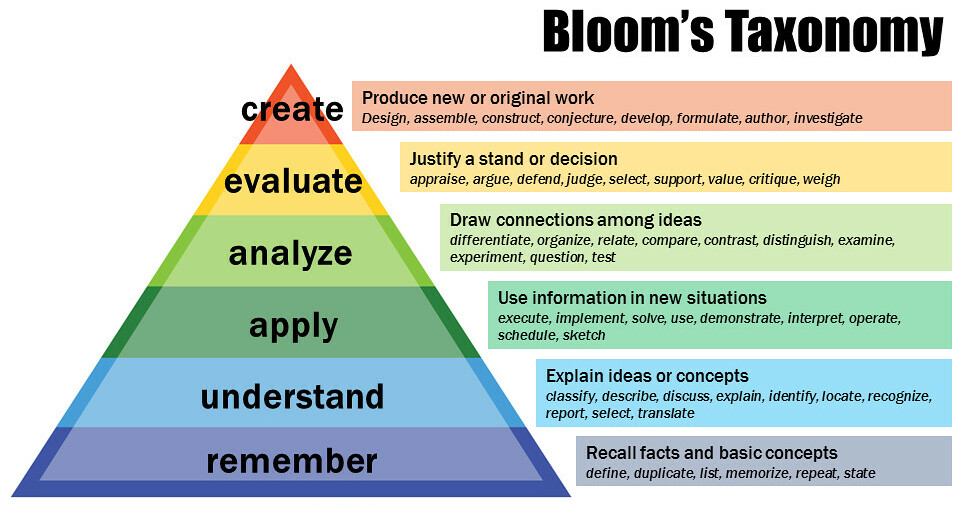
Remember the negative example of the godawful LinkedIn post I mentioned? To be able to critique something is a Bloom’s Taxonomy Level 5 ability – Evaluate.
Fun improves your learning at all levels of Bloom’s Taxonomy.
Adults need fun too
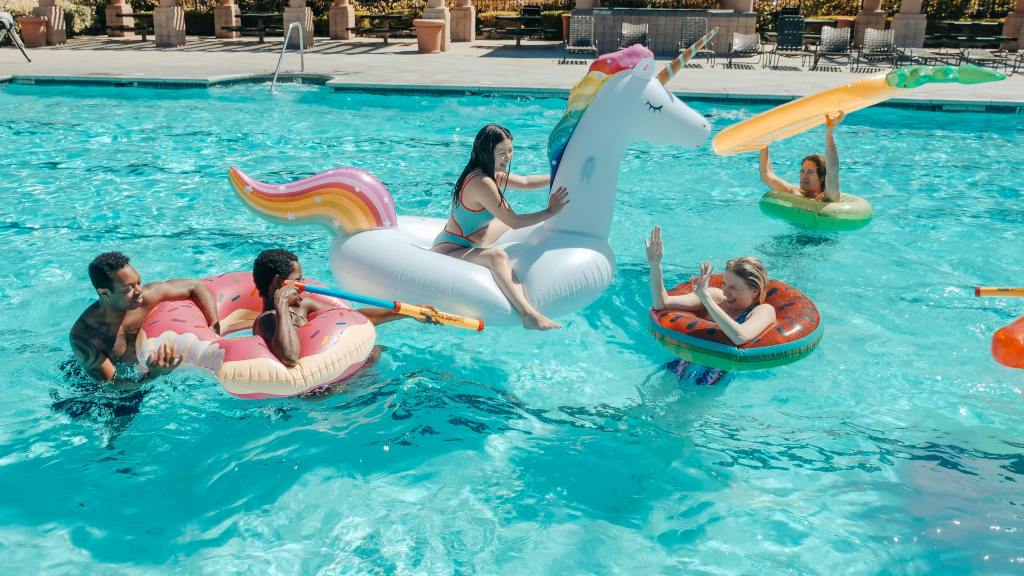
Yes, adults love fun too, even the serious ones, even the cynical ones. Put a roomful of adult learners into groups and get them to come up with group names, and you’ll see the excitement grow and energy increase. It’s about andragogy principles – which say that adults learn best when material is relevant, self-directed, and enjoyable.
The problem is that workplace learning is often dry. To bring back novelty, challenge, and social connection – you need fun .
After all, which sounds more appealing: mandatory compliance training or interactive escape room session?
Play also fosters psychological safety and experimentation (Kegan & Lahey, 2016), which increases productivity in learning and in work.

Fun makes you a better learning designer
Fun is not all about the learner either – it benefits you, the learning designer. You, the educator. You, the teacher.
Come on, haven’t you ever wanted to be naughty with your learners (in the most legal and appropriate and decent sense, of course)? I like to play little harmless and good-natured tricks, surprise them (in a healthy and positive way), and engage in a little deception and reveal (while adhering to the lesson requirements, of course).
Designing your lessons in a fun way like that is intrinsically motivating for facilitators and curriculum designers because, come on, who doesn’t like to be naughty? Playing is also a productivity hack that can speed up your learning.
It also leads to more creative lesson design and a more joyful experience. I’ve done it in the following ways:
- Harmless and good-natured tricks: during a scavenger hunt, my co-facilitator secretly went to change clothes to see if any participant would spot the difference
- Healthy and positive surprises: for younger learners, I often burst in wearing an Optimus Prime helmet for Children’s Day week
- Deception and reveal: creating scavenger hunts, and hiding clues in a session
Bonus: The learning impact is higher and you get better feedback because people remember your lessons. Heck, people will actually give you feedback and fill in feedback forms.

Fun is not fluff
I know what some supervisors are thinking – what if you play so many games that they end up not learning?
But what I’m advocating is not fun without purpose or fun for the sake of it. That’ll be entertainment. Maybe that’ll be edutainment too – but edutainment is entertainment first, education second. That’s not the point of a lesson.
What I’m advocating is fun with intention. That, to me, is learning design mastery.
The learning objectives are a priority. I’m not suggesting otherwise. But adding intentional fun means also prioritising the leaners. It’s learner-oriented.
So when you embed the learning objectives into the fun, you’re creating intentional engagement.
10 tips to design with intentional fun (that take less than 10 minutes)
It honestly doesn’t take a lot to add the element of fun to your lessons. Here are tips that take less than 10 minutes to implement.
1. Gamify with simple concepts
Encourage competition through progress systems – such as levels, points, progress bars, or time limits. It also imparts resource management skills to learners. I like to introduce a health meter for younger learners. For more detailed gamification tips, you can check out my earlier resource on designing lessons like games.
2. Use simple narrative hooks
Frame the lesson in terms of quests, mysteries, or stories. Make the learners the protagonists who have to overcome a conflict to save the day. Make them feel cool, heroic, and powerful. I always label and name the final task of the day the “final boss” – it gamifies it a little and implicitly states that the learners are heroes. If you want more detailed tips on creating narratives in lessons, you can check out my earlier resource on designing lessons like TV shows.
3. Offer choices
Where possible, let learners choose what to cover first. Show all the topics you need to address in a session, and let learners pick what they like. When it comes to practice, discussions, or assignments – let learners pick the topic and format (to a reasonable extent). It’s about giving autonomy to learners.
For me, I try to show the lesson outline if possible and let learners decide what they want to cover first.
4. Create desirable difficulty
For my CELTA (TESOL), one of the most important concepts that was imparted was to design lessons at the learners’ level +1. This means that your material should be just one level about the learners’ current standard. This makes it achievable (which makes them feel happy) only with effort (which creates engagement). Make it hard enough to be interesting (Bjork & Bjork, 2011) but not more than that – so learners’ level +1. In language classes, it means using vocabulary that is just above their level, but including a glossary for them to look up meanings (scaffolding).
5. Create novelty
Choose different formats – which includes adding videos, games, and other media into your lessons. Introduce unexpected elements into your lessons. When it comes to teaching younger learners about Area & Perimeter, I often make the analogy of area = backside and perimeter = toilet bowl. Years later, they still remember the analogy, and they never mix up area and perimeter as a result.
6. Use humour – wisely
While I advocate humour, I strongly advise knowing your crowd. Not everyone likes poop jokes (young learners mostly do), so be aware of how your jokes land. Instead, you can use light-heartedness, dad jokes, or puns to make learning more memorable (Schmidt, 1994).
My way of using humour for adult learners is to complain about something (that is not controversial, so not gender, race, religion, politics or anything sensitive) – something that’s relatable and a minor inconvenience, but still a pain point nevertheless. Remember the humblebragging LinkedIn post I mentioned earlier? That’s how I inject humour.
7. Include social interaction
Turning anything into a discussion is a quick way to inject fun. People like to express their opinions, and what better way to do so than through a discussion? You can also add roleplay, simple games, or peer feedback (build safety first!) to create social interaction. For my positive psychology sessions, I like to have the participants do pair-sharing to process what they’ve learnt.
8. Use real-world examples or simulations
Making learning feel relevant and practical is always helpful – and bringing in real-world examples or simulating real-world situations is an easy way to do that. I sometimes rewrite Mathematics problem sums as bill splitting questions – then unleash them on my learners.
9. Tap into curiosity
When using Gagné’s Nine Events of Instruction, my favourite part is Event 1: Gaining the attention of the learners. My way of doing it is to start with a provocative question or surprising fact. I also do it in my resources – like talking about gavage (complete with images) in my article about learner-oriented lesson design. You can Google gavage – or click on this to find out what it is (this is me tapping into your curiosity).
10. Celebrate progress through prizes
People like to be acknowledged for effort. They also like to feel they’ve earned what they receive. Prizes or awards for effort are ways to do that. You can use badges, applause, silly titles, or trinkets to reward effort. For adults, food works best – the best/fastest group gets snacks (that they’ll end up sharing with the class anyway, so your snack budget plays double duty). For children, I like giving handwritten titles or funny certificates because they get so little of those (and they keep those things forever, no matter how crumpled it gets).

The joy of serious play
If you remember this website’s title – it’s Fun to be Smart. There’s reason for that – because fun makes learning more efficient, and more learning equates to being more competent and smarter at what you do.
Fun isn’t the opposite of rigour. You’re making the lesson more easeful – and when you do that, learners put in more effort, because they find the effort to be worthwhile.
Make your next lesson more joyful. Take joy seriously, and your learners will take the learning more seriously.
Start with fun, and everything else will fall into place.
You might also want to read:
- What real productivity looks like: how to avoid toxic productivity
- Permission to play: how “doing nonsense” is the smartest productivity hack you’re not using
- The secret parallel between lessons and games: writing lessons like a game designer
- Lessons are the new Netflix: Scripting lessons like a TV show
- Designing lessons for learners, not just content: empowering education for everyone
References


 Fun to be Smart
Leave a comment