
TV shows taught me how to write lessons
You know how audiences binge watch TV shows? There’s something we can learn from that for lesson design.
You’ve seen how people get mesmerised by a good TV show – eyes glued to the screen, absorbing every word and scene that comes out. In the good old days (ha!) of broadcast TV, that also meant a frantic dash to the toilet during commercial breaks, making sure that not a single minute of the episode was missed.
If lessons were as engaging as that – imagine how effective the learning would be.
When I first embarked on lesson design and education, I subconsciously framed my lessons as a TV show. I would always make sure to open the same way – like how opening titles are always the same for TV shows – to set the tone and mood for the lesson. I structured it like a TV show, with foreshadowing as skills building, the major conflict as the final task, and tying the lessons all together as a “season”.
A large part of comes from being a screenwriter (Crimewatch, Point of Entry, Incredible Tales) – which meant that I borrowed directly from the narrative beats of television when it came to lesson design. Back then I wrote lessons based on intuition. Now that I look back – I realised that it was an effective way to go about instructional design.
Crafting lessons as TV episodes has boosted engagement, improved retention, and brought joy back to teaching for me.

The metagogy (andragogy + pedagogy) of stories
So what’s the science behind it? Well, stories are the oldest learning technology, when you come to think of it. Scott McQuiggan, Jonathan Rowe, Lee Sunyong, and James Lester did a study on narrative-centred learning environments and discovered that there were many motivational benefits – elevating self-efficacy, presence, interest, and perception of control. This in turns leads to stickiness of learning and better contextual relevance.
This also works for children’s classrooms – increasing their sense of belonging, and of course, oral and written language abilities, as Catherine Wright and Sandra Dunsmuir discovered.
And of course, Malcolm Knowles tells us that adults crave relevance and real-world connection when it comes to andragogical principles.
It’s no wonder that using the TV show structure for lessons works so well. It anchors the content in a narrative, through relatable, purposeful contexts. It makes you remember the learning better because you remember it as a story, rather than as content that you have to memorise.

The lesson as a story
Traditionally, we use the Three Act Structure for writing screenplays. But I’m not advocating that structure for lessons (although you can use it if you want to!) because it requires a lot of storytelling training to be able to weave it in well.
Rather, I’m advocating using specific techniques you can use, with the mindset of having your lesson play out like a television show.
So here’s my formula for it.

Teaser – Grab Attention
In TV, episodes often open with a teaser – a short, attention-grabbing segment that’s meant to excite you, before the episode begins proper. Teasers usually end with a punchy joke (for comedies) or set up a cliffhanger (for dramas) that then leads into the premise.
In lessons, we often start with”gaining attention” (Gagné’s First Event) or “orienting learners to the topic”. It’s meant to engage the learners in what the lesson’s subject matter is about and to elicit prior knowledge that they have. The objectives and desired outcomes are very similar to those of the teaser, aren’t they?
With the teaser mentality, go into the “gaining attention” stage with these two objectives in mind. You could
- ask a controversial question (be mindful of boundaries!)
- solve an unsolvable problem
- present an impossible-looking situation or picture
- cite a shocking but factual statistic
For a session about gender issues, I opened by saying “gender equality is stupid” (I later qualified it by saying that it’s impossible to make it truly equal since both genders are different in terms of biology) and eliciting comments.
Unfortunately for me, another educator happened to walk by as I loudly proclaimed “gender equality is stupid” and gave me a wide-eyed stare. I had to explain to her afterwards what I did when she wasn’t around.
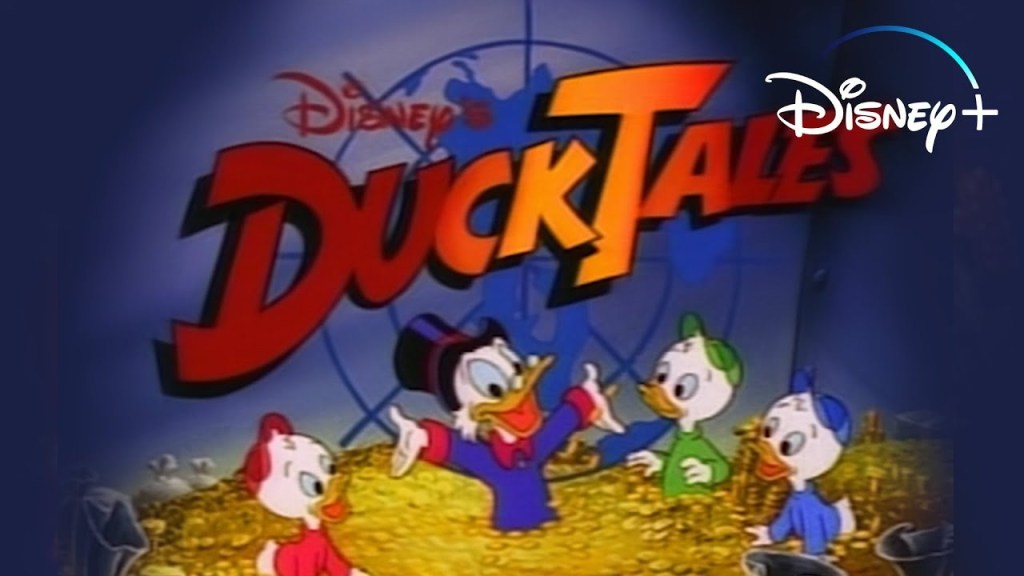
Opening Titles – Learning Routine
You know what this is – the familiar theme song of the show, followed by the introduction of the usual cast of characters. The whole point of opening titles is that it’s a form of a ritual that says “you’re in this fictional world now”.
It’s a cognitive cue.
By using routine openings – such as a slide deck, a warm-up activity, or even some sort of class mantra or rules, you create familiarity. This familiar opening will reduce extraneous cognitive load (ie, distractions) and prime the brain for the structured learning is about to begin, John Sweller discovered. What’s more, such predictable rituals support autonomy and psychological safety, which are two important motivators for adult learning, as Malcolm Knowles, Elwood Holton, and Richard Swanson tell us.
For me, I usually open my class with:
- a mood check-in (how are you feeling today, on a scale of 1 to 10)
- a humorous anecdote
- a deck of colourful pop culture slides (for younger learners)
- sharing what we’re going to be learning today
In my class of younger learners, I literally have a semi-animated slide deck with a transforming Transformer, who transforms in a “Ready, Set, Go” kind of sequence to excite them.

Foreshadowing – Setup & Payoff
As a screenwriter, it’s my job to build in callbacks into the story. What seems like an offhand joke in the second scene becomes the plot twist in the climax. My scripts follow the narrative principle of Chekhov’s Gun – that every element in a story be necessary, while irrelevant elements should be removed.
Likewise, every bit of your lesson should serve as many functions as possible, and foreshadow what will be covered later. That section on technical terms or vocabulary you’re going through now should be a valuable part of a later component. The impossible problem you revealed in the teaser is the actual problem they solve later. The incredible manoeuvre you did at the beginning will be the movement your students perform later.
It’s an application of David Asubel’s advance organisers, where learners integrate the new material learnt (payoff) with prior knowledge they have received (setup) . It’s also reflective of Lev Vygotsky’s Constructivist Learning Theory, which posits that learners construct their own understanding (payoff) through their experiences and social interaction (setup).
It’s more of a process than a list of tips, but here is how I approach it:
- analyse the main activity/task
- break it down into the different skills and knowledge required
- check – have each of these skills and knowledge been covered in earlier parts of the lesson? can you integrate this in an earlier section, if it has not been covered?
- for prior/assumed skills and knowledge – can you integrate it as a game or discussion/reflection segment earlier in the lesson?
For my positive psychology workshops, I often integrate the discussion points (such as a difficult situation, or a deep desire) into the icebreakers (share a challenge you met recently, or something you really like). That way, they already have a discussion topic in mind for their pair-sharing, and it comes naturally to them.

Climax – The Main Task
In every television episode, there has to be a climax – where the major conflict happens. Even in comedies, it’s when characters who have opposing objectives clash – usually with big jokes and huge laughs.
The entire episode often builds towards this main conflict – which is how the entire lesson often builds towards this main task/final task.
But it the main conflict only works if the episode has been building towards it – if it has given you sufficient knowledge of the plot, the character’s motivations, and what’s at stake. Likewise, for lessons, use Chekhov’s Gun’s principles to make sure your learner has everything they need for this final task.
The climax of the television episode correlates with the Experimentation segment of David Kolb’s Experiential Learning Cycle, which is why there are so many similarities with the main task of a lesson. Having an effective main task is also at the heart of Marriner David Merrill’s First Principles of Instruction, which is that problem-centred, task-based learning is what enhances transfer and retention.
What about the tension and apprehension that comes with the main task (and exams, for that matter)? Isn’t that bad? Well, actually, tension can be good in a safe environment. Leon Fastinger’s Theory of Cognitive Dissonance shows us that curiosity is drive by cognitive dissonance. So as long as you make it safe to fail, that struggle, that tension, that apprehension – it’s fuel for learning.
In designing the main task as a climax, you should:
- ensure there’s a level of challenge for all learners (ie, the possibility of failure) to maintain tension
- provide optional scaffolding so that success is achievable by all learners (ie, grading the task for different levels)
- provide all the respective skills and knowledge beforehand, so that it’s fair and it equips learners with that they need
- frame it as the protagonist’s struggle – this is what is needed to achieve victory!
I often call it the “final task” in my lesson design.

Callbacks – Linkages
This section on a callback is a callback to me mentioning callbacks in Foreshadowing – Setups and Payoffs section. See what I did there?
In TV shows, when there’s a payoff for a setup earlier – this rewards you for paying attention during the show. It’s a form of a callback. It prompts viewers to draw links to earlier scenes.
Similarly, in lessons, there are moments that help learners to draw links to earlier material. This is a form of linkage and integration, and it helps the learners to revisit concepts that have been shared earlier. Henry Roediger and Andrew Butler explained that spaced retrieval – using callbacks that refer to earlier concepts taught – help to reinforce retention because learners revisit concepts through reflection, peer teaching, and practical application.
How can you do a callback? Here are some techniques to elicit that integration with earlier material:
- use the same context (such as situation, characters, or items) but increase the difficulty level of the problem
- use the same discussion issue, but include 2 or 3 more confounding factors
- provide the same problem that you introduced in the teaser
In a Mathematics class, I used this for an Assumption Method/Making A Supposition question. I presented a problem sum where students had to guess and check (a very laborious method) to get the answer – then at the end of the lesson, I presented the same problem, which was solved in 4 steps with an application of the heuristic I had shared.
There were many wows (and to this day, I still have a student who refers to this as “Mr Goh’s powerful method”).

Closing Scene – Reflective Ending
In television, a good episode lands with a solid ending. You don’t just get the characters laughing to some random situation (like they always did on Ninja Turtles). You see the characters reflect. You see a lesson learned. You see how the status quo has irrevocably changed.
Similarly, your lesson needs to end strong.
If this is the first or trial session for an ongoing class, then it’s the dealbreaker. It’s what will determine whether the new learners stay or go.
That’s why you always see adult lessons ending in a reflective session. Getting learners to reflect on what they’ve learnt often creates even more learning for them – and it drives home the impact of what they’ve learnt. It’s what Donald Schön highlights in his Reflective Practitioner Model – that deep learning and future action comes about through metacognitive reflection. For Benjamin Bloom’s titular Bloom’s Taxonomy (bet you didn’t know his name was Benjamin Bloom) the Affective Domain tells us that emotion dries values and behavioural change.
How do you that? Through:
- reflective journalling
- group debrief
- exit ticket tasks related to the topic
- simply asking learners to share one new insight they shared
Basically, emotions drive learning – and that’s how you make the closing moments of your class stick.

Season Arc – Your Curriculum Outline
Good TV shows often have a season long arc planned out, where you see characters develop, plots unfold, and discover the BBEG (Big Bad Evil Guy) of that season. Buffy the Vampire Slayer did that a lot.
And that’s reflective in your curriculum design – the outline for the lessons that you are teaching. Each session should build on the previous ones, both thematically and cognitively. This is how Spiral Curriculum Theory and constructive alignment work – like John Biggs shared, it is about how activities, outcomes, and assessments should be cohesively designed.
Sometimes it can just be a matter of:
- using recurring characters and settings (especially for case studies)
- having recurring motifs
- drawing on a concept in an earlier lesson
- showing how a skill can evolve or be used in different contexts
Bonus – add a teaser for the next lesson. Share what they’ll be learning, and you’ll have future continuity for classes.

The lesson as a script, educator as a storyteller
I’ve used scriptwriting as an analogy for lesson design – but you don’t have to be a trained scriptwriter to use these concepts. You watch TV and you’re a seasoned audience of TV shows. Just think about how you feel as the audience, and how that applies to learners.
What’s this episode about? What’s this lesson about?
When you structure your lessons like a TV show, you impact learners on an emotional level. You get them to experience your lessons they way they binge their favourite TV show. Because the learning becomes the story.
And stories are what stick.

References
Knowles, M., Holton, E., & Swanson, R. (2005). The Adult Learner.
Sweller, J. (1988). Cognitive Load During Problem Solving: Effects on Learning. Cognitive Science.
Gagné, R. M. (1985). The Conditions of Learning and Theory of Instruction.
Kolb, D. A. (1984). Experiential Learning: Experience as the Source of Learning and Development.
Festinger, L. (1957). A Theory of Cognitive Dissonance. Stanford University Press.
Schön, D. A. (1983). The Reflective Practitioner. Basic Books.
Biggs, J. (1999). Teaching for Quality Learning at University. Open University Press.


 Fun to be Smart
Leave a comment