

Have you ever eaten foie gras? It’s fatty liver of a duck or goose. These birds don’t normally have fatty livers, so farmers employ a process called “gavage” to do so. Gavage is the process of force feeding ducks or geese to cause their livers to swell – by ramming a feeding tube down their throat to directly pump food into their stomachs.

And that’s what many lessons – be it for corporate training, public workshops, or even school classrooms – feel like. The educators are like farmers, force feeding learners with an unrelenting stream of content. While it may tick off boxes on the syllabus checklist, does that sort of learning really stick? What about the learner – the human who’s here to learn?
“The mind is not a vessel to be filled, but a fire to be kindled.” – Plutarch
Fundamentally, learning must be sticky – otherwise, what’s the point?
On a deeper level, the most powerful lessons don’t just deliver information – they spark curiosity, evoke emotion, foster ownership, foster understanding, and create revelations. And we do that through experiential learning. Learning is fundamentally a human experience.
To design lessons as experiences, is to design lessons for humans.

The importance of the learner-centric paradigm
Learners all bring prior knowledge, emotional baggage, and lived experiences into the classroom. This applies to all learners, not just adult learners – after all, even children are human beings.
Children bring the social media they’ve seen (prior knowledge), the scoldings and praise they’ve gotten (emotional baggage), and interactions with family (lived experiences) into the classroom.
If children already have so much in them, what more adults (who have so many more years of life experience)?
Therefore, designing with the leaner in mind means considering:
- their cognitive, social, and emotional states
- their need for meaning
- their desire for agency (and choice)

The science speaks for itself
Multiple educators have espoused the benefits of learner-centric classes. Jane Adamson advocates putting learners at the heart of the lesson – to encourage and empower learners. Krista Kaput gives a historical overview of how learner-centered lessons have benefitted different eras. The team of Viput Bhardwaj, Shuwei Zhang, Yan Qin Tan, and Vijay Pandey discovered that learner-centered approaches encourages active participation and fosters essential critical thinking skills.
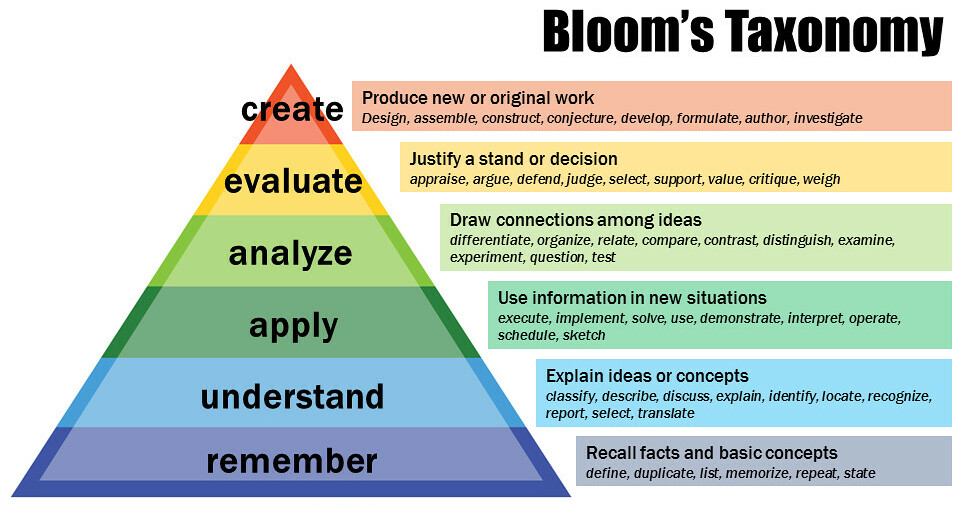
Those thinking skills are how we know that the learning has been truly integrated into the learner. After all, as educators, we’re constantly striving for the higher-order thinking of Bloom’s Taxonomy, like Evaluation and Creation. To get there, learners must be engaged in their learning, which means having emotional or cognitive investment. Otherwise, even the most well-structured lesson plan will fall flat.
What does this mean? It means that the learning has to fit into the Zone of Proximal Development – so it’s not a one-size-fits-all approach (ie, with activities for fast finishers, and careful scaffolding for less experienced learners). Remember Knowles’ andragogical theories? Adult learners are self-directed and purpose-driven (so are children, to an extent) and so integrating their prior knowledge is important. And Self-Determination Theory says that autonomy, competence, and relatedness (all hallmarks of experiential learning) increases motivation.
To summarise the evidence for this:
- Putting learners at the heart of the lesson empowers and encourages them
- Different historical eras have benefitted from learner-centric lessons
- Learner-centered approaches creates active participation and develops critical thinking skills
- Learning must be in the Zone of Proximal Development
- Integrating prior knowledge is important for self-directed and purpose-drive learning
- Self-Determination Theory states that motivation comes from autonomy, competency, and relatedness
Case study 1: Teaching wellbeing theories through scavenger hunts and puzzles
I run a regular workshop at Happiness For Busy People which imparts wellbeing theories and formulas for happiness. In particular, I use the PERMAH theory of wellbeing, which as you might have guessed, consists of six components.
But a workshop where I drone on and on about six components is going to be snooze-inducing. So instead, I developed it as a series of scavenger hunts, with differing levels of difficulty as well as varying play conditions. After that, the learners reflect on their experience – which builds on their understanding of each theory of PERMAH.
It’s been effective, and the look of understanding on their faces is priceless when they connect their experience with the subject matter.
Case study 2: Teaching communication skills and customer service through an educational escape room
We were engaged to run a communication skills and customer service workshop for a team bonding session. I’m sure most adults already know what basic communication skills and customer service techniques are, so sitting through a lecture on that would be rather dry.
Instead, we shaped it as an educational escape room – where learners had to investigate a dilapidated house in order to restore it. How? By applying communication skills and principles to solve puzzles, thus motivating the learners to actively use those skills for a greater purpose (winning the game).
I’ve honestly never seen participants talk about communication skills and customer service with such joy and purpose before.

Sticky learning is experiential learning
So you see, engagement and fun are key ingredients for memorable and impactful learning. That’s why we use discussions, hands-on activities, and creative problem-solving to stimulate the internalisation and recall of information.
David Kolb’s Experiential Learning Theory also postulates that knowledge is created through the transformation of experiences.
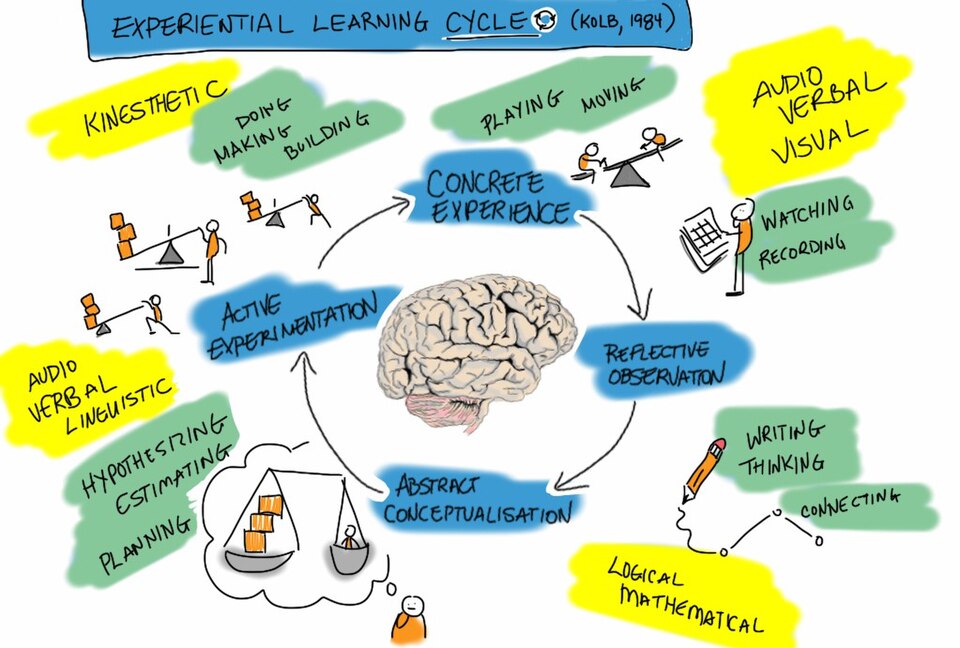
All this points towards :
- Getting learners to do the practical, then teach the theory
- Creating space for reflection, discussion, and conceptualisation
- Encouraging exploration and experimentation in a safe space.
And you know what? It sounds an awful lot like… a game.
The gamification of learning
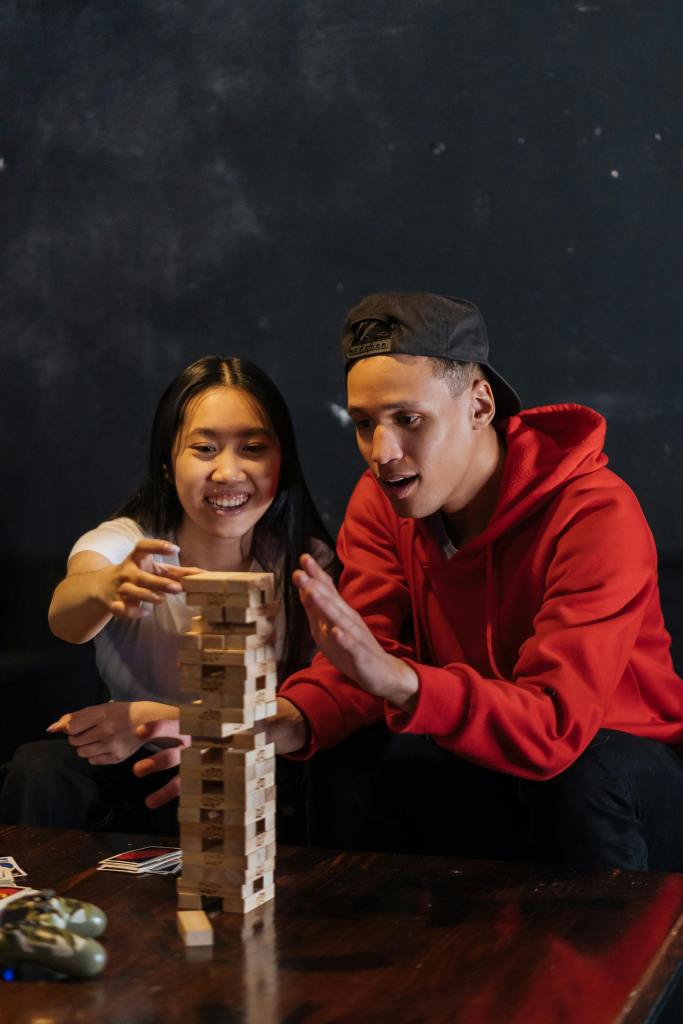
I’m a big fan of the gamification of learning (you mean my two case studies didn’t clue you in?). After all, I love creating educational escape rooms. But games don’t always have to be these huge, elaborate affairs. Simple activities like the aforementioned scavenger hunt, card-based activities, roleplaying hypothetical scenarios are enough to gamify learning.
More importantly, gamification leads to learner-centric learning, which leads to sticky learning.
More on that in my earlier post.

Creating learner-centric lessons
As educators, we know how to make lessons learner-centric. That’s why we do pre-lesson surveys, why we have icebreakers, and why we strive to make small talk with our learners before class. So it’s a good reminder to put intentionality behind these actions.
One very basic thing I do is to do a mood/energy check-in with the class – on a scale of 1 to 10, how are they feeling today? It comes from a place of “Who is my learner and how are they feeling today?” rather than “What must I teach?”.
Here are ways to make lessons more learner-centric:
- Pre-lesson surveys
- Icebreakers involving preferences and choices
- Making small talk with learners before and after class, and during breaks
- Using learner-driven strategies
- Creating activities for fast finishers
- Creating scaffolding for learners who find the material challenging
- Having a narrative for learners – whether it be through anecdotes or through a game
- Including collaboration – team activities and discussions – in lessons
- Using points, badges, or other types of non-monetary rewards
- Giving learners ownership of the lesson
- Showing the value and relevance of the subject matter to learners
- Cultivating positive emotions for learners
- Creating a sense of belonging for learners
These aren’t just feel-good factors. John Medina’s Brain Rules explains that emotionally charged events are better remembered, for longer periods, and with more accuracy – because they activate more brain regions, such as the amygdala and hippocampus. Learner-centric lessons increase motivation, learning retention, and performance.
They make the learning sticky.

The future of learning is human-centric
Learner-centered lesson design improves engagement, retention, and application. After all, learning is most effective when it is problem-centered and applied, as David Merrill discovered. Yes, we’re moving to an age of AI-powered learning.
But the learners are still humans. Our lessons should not be mechanisms for delivery content, or we’re just force-feeding our learners like ducks and geese.
So the next time you plan a lesson, think of ways to make it more learner-centric. If you already embody those principles, remember the intentionality behind it.
Because when you design for humans, the humans will take care of the content.
References
Adamson, J. (2024, March 13). The benefits of embracing student‑centred learning. OxfordAQA.
You might also want to read:


 Fun to be Smart
Leave a comment