


If that day hasn’t come yet – then it will soon. The day that your child makes dirty jokes. And tempted as we are to clamp down on them, tell them off for it, and make absolutely clear that dirty jokes are in no way acceptable…
They’re a fact of life.
Now, if you personally don’t find dirty jokes funny, or you’re going to ask me to mind my language, then this article isn’t for you. It’s better for you to parent according to your principles and preferences, which may mean that dirty jokes are off the table for you.
For me, I make dirty jokes with my adult friends. All. The. Time. I don’t when I’m teaching children, of course – for obvious reasons:
- children may not have the capacity to understand said jokes
- children may not know the right context with which to tell such jokes
- it’s generally frowned upon for adult teachers to make dirty jokes to young learners
But the thing about children is this – the more you tell them not to do something, the more it is they’ll do it. It’s why so many educators encourage parents to have an open talk about sex before children reach puberty – it’s to normalise it, so that when children need advice about the topic, they come running to their parents, rather than to an unreliable (and potentially harmful) source.
Rather than scolding your child – turn a dirty joke into a teachable moment. Connect it to their academics, connect it to life experiences. They’re already interested in the topic by virtue of the fact that it’s seemingly taboo – so leverage on that interest and impart some knowledge to them along the way.
The benefits are twofold. First, your child gets to learn something from what would otherwise be a frustrating experience for both you and your child. Secondly – when you deconstruct dirty talk into very academic terms, it loses its coolness and tabooness, which automatically reduces your child’s motivation to make those jokes.
So how can you do that? Here are some ways.
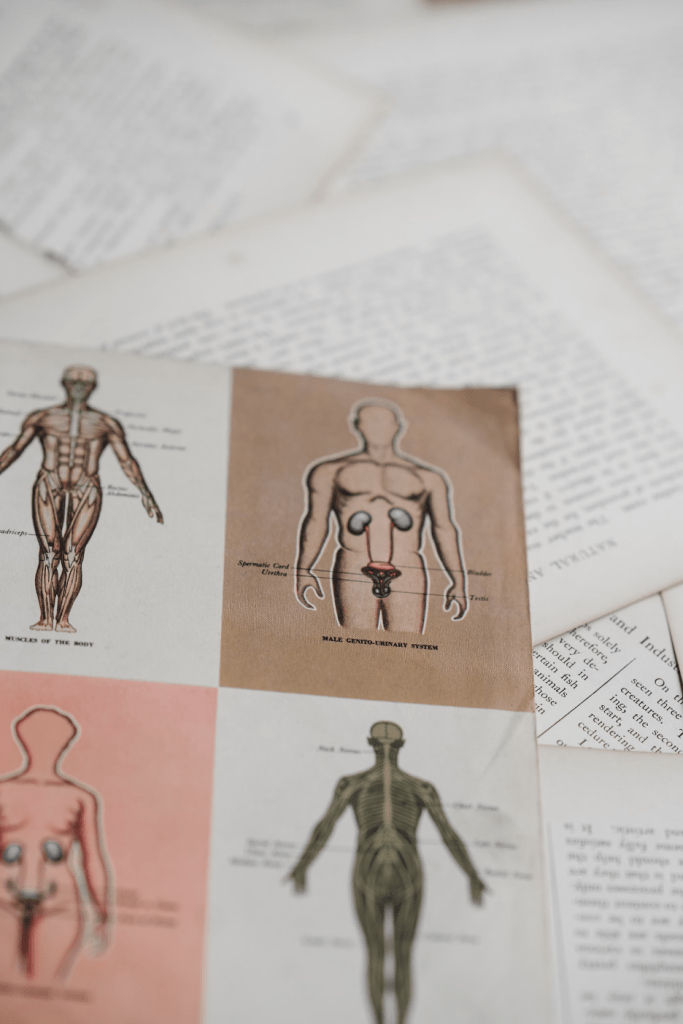
Anatomy of the body. (Credit: Unsplash)
Connect genitalia jokes to Science topics
The most obvious contender for this is the Human Reproduction chapter in PSLE Science (commonly taught in Primary 5). When they make a joke about genitalia, revise the chapter with them. Make sure they know the scientific terms for the body’s anatomy. Make sure they know how to spell it and they know what are the key words required when it comes to explaining such questions.
For myself, that’s how I dealt with jokes dealing with balls or pussies. I would ask why they were laughing. I would ask them if they knew whether ball/pussy was a colloquial term, and what the scientific term was. I required them to know this if they were to continue laughing – after all, as an English teacher, I expect my students to know both the colloquial and formal way to refer to something.
When you explain it in a polite, informative, and educational way – it loses its power. And after you explain it once – you can expect students to be able to explain it to other students. Once you treat it in such a clinical manner, you not only make it lose its humour to students, but you also get them to revise their Science topics.

Making the bed is important. (Credit: Pexels)
Explain hygiene issues with sex jokes
By Primary 5, most students will have encountered a joke about 69 (the coital position), or at least have heard of it. For me, that’s the most common dirty joke I have to deal with in class.
The thing is – many students don’t actually know what 69 is. They only know that adults have a horrified look and will shush them. They know that it’s funny because the way adults react to it is funny. But they don’t know what it is.
For me, I explain what it is – clinically and scientifically. I explain the etymology of it – the number “69” looks vaguely like the coital position it describes. Then I say that when you make a joke about it, it’s like asking to be in that position. Was that your intention in making that joke?
Without fail, I’ve gotten a “no” every time.
I usually go on to tell them that when they say “69”, they’re implicitly asking to be in that position – and if they don’t want to be misunderstood like that, then they shouldn’t say it. To students, it’s horrifying knowledge. It’s horrifying to learn what “69” really means. It’s also forbidden knowledge – which means they’re probably going to explain what it means to all their friends.
If after explaining this, there are still more “69” jokes – I turn it into a lesson about hygiene and coital positions. Again, by turning it into a clinical and sterile topic, the joke loses its power. And you also get some learning in.
I use “69”, but that’s because it’s the joke that’s the most in vogue now. Substitute it with any other sexual position that you find children making jokes about, and you’ll see how quiet they get after that.

Do you know the meanings of the words you use? (Credit: Unsplash)
Find the literal explanation of vulgarities – and test them on it the next time
One thing I hear relatively often too is “bastard”. With all its plosive sounds, it’s actually quite a fun word to say. It’s also unacceptable for most adults.
The thing is – most students don’t know what it means. So find the definition – and make them memorise it. The next time they make a joke like that – test them on it. Make sure they can spell it when you ask. Again, be clinical and methodical about it. It’ll take the power away from said jokes.
This works for most other words – as well as “fuck”. But that bears special mention, because of its recognisability

Some words still stress us out. (Credit: Unsplash)
What to do with the word “fuck”
Because “fuck” is universally deemed as the worst swear word one can say, it’s also the toughest to handle. Not everybody may have the same tolerance for “fuck” as you do (whether it be higher or lower), and it’s always better to err on the side of caution.
First thing is – don’t react. Don’t look shocked, offended, or angry. It’s just a word.
Ask your child if he or she knows what it means. Most of the time, they don’t know what the literal meaning is.
Make them read the Wikipedia page on “fuck”. It’s long. It’s dry. It’s quite informative though.
Then test them on it. The rationale is that if they use the word, they must fully understand the context of it – just as they understand the context of saying “kopi” rather than “coffee”. And with a word as complicated as “fuck”, they’ll need a lot of context.
It’s the same approach as earlier – make it as clinical and logical and academic as possible. Only in this case, you get to throw in a little of history as well. If they’re done, ask them to connect the history of the word with real world history.
But for “fuck”, it’s important to understand that it can be unacceptable on a level that’s akin to religious fanaticism. In other words, blithely using “fuck” can be as insulting as making jokes about someone’s religion. It’s one of the few words that actually draws that much ire from people – and this is something that children should know. It’s not just shocking to adults – it could be offensive to others as well.

All about language. (Credit: Pexels)
At the end of the day, it’s like knowing the difference between formal and informal language
All the tips above help to take away the power of those words, while sneaking in some recall through academic subjects. It’s only when those powers no longer have the stigma of shame attached to it, that you can start explaining that there inappropriate uses of it, and less inappropriate uses of it.
Knowing when to use it, and knowing when not to use it, is like knowing the difference between formal and informal language.
For me, I usually admit that I will use it when I’m with adults – and it’s an example of changing my language when i’m with different people.
Most students will perk up when they realise that there’s an implied “appropriate” situation to use it in. But as educators, it’s not our place to say this. You can agree that there is – but it’s up to them to find out.
And when all’s said and done, they may realise that dirty jokes and dirty words are just that – words.
Dirty jokes are ever present – even in television. As a television scriptwriter, I’ve spotted my fair share of dirty jokes that have been sneaked in.
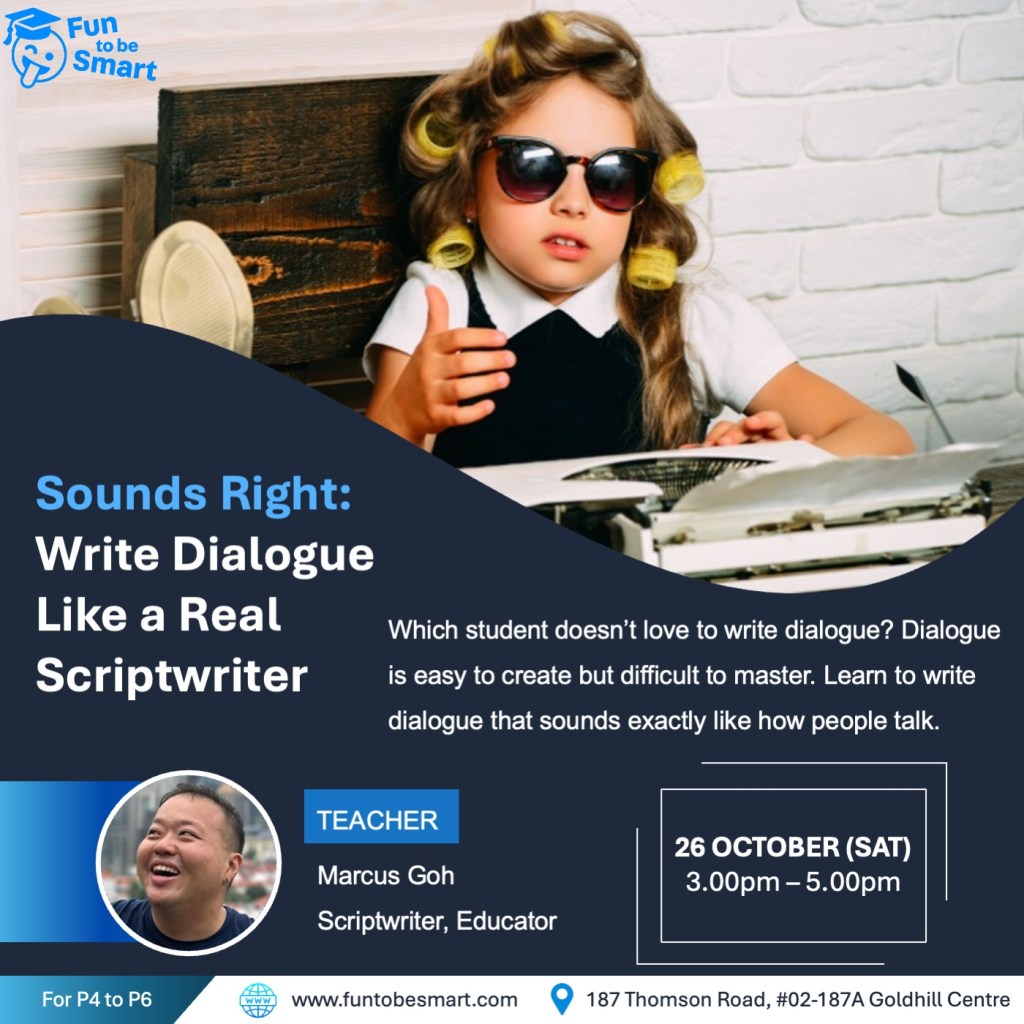
Have you ever thought of being able to write dialogue (clean dialogue) that sounds authentic? Then watch out for my upcoming workshop – Sounds Right: Write Dialogue Like a Real Scriptwriter!


 Fun to be Smart
Leave a comment